It’s a common misconception that butcher gloves are a single product with zero variations. The term actually covers three distinct glove types that are each built for different tasks and risk profiles. The wrong kind of glove leaves a gap in protection at exactly the location and moment it matters most. That’s why knowing which type fits which application is the starting point for any effective hand safety program.
1. Cut-Resistant Butcher Gloves: The Daily Work Glove
The cut-resistant option is the most common type of butcher gloves found on the processing floor. They protect against knife blade contact during boning, trimming, and portioning meat. They do this without sacrificing the grip and dexterity workers need to handle the raw material efficiently.
Cut resistance follows the ANSI/ISEA 105-2024 protection ratings from A1 to A9. For hand knife tasks in meat processing, A5 through A9 gloves offer the right protection range. For example, Bunzl Processing Division’s WorkHorse® A6 10 gauge butcher gloves are rated ANSI level A6. As the top-selling model in this category, it balances cut resistance, dexterity, and comfort for full-shift wear.
WorkHorse® cut-resistant gloves blend high-performance fibers with stainless steel. They meet USDA food handling requirements, are latex and silicone-free, anti-microbial, and machine washable. In processing environments where gloves need cleaning between tasks, this keeps the program practical.
One important distinction you should note: cut-resistant gloves are not cut-proof. They reduce the severity of a cut if a knife makes contact. When handling jobs where the non-knife hand is at risk for a direct blade strike, a metal mesh glove offers a better option.
2. Metal Mesh Butcher Gloves: Maximum Protection for High-Risk Tasks
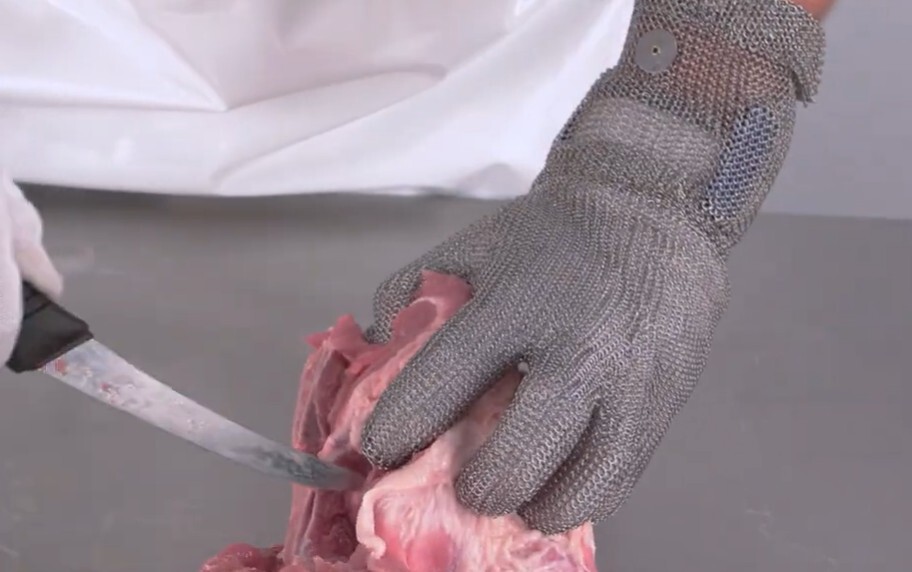
Meanwhile, a blade slipping toward the holding hand is the most common serious injury in these applications. Metal mesh butcher gloves offer the highest cut and puncture protection available. They suit the non-knife hand during boning and breaking tasks.
WorkHorse® metal mesh gloves are machine-welded for consistency and uses high-tensile stainless steel rings. The four-ring-joined construction prevents knife sticks at the seams, the area where cheaper mesh gloves typically fail. The stainless steel closures resist bacteria and corrosion.
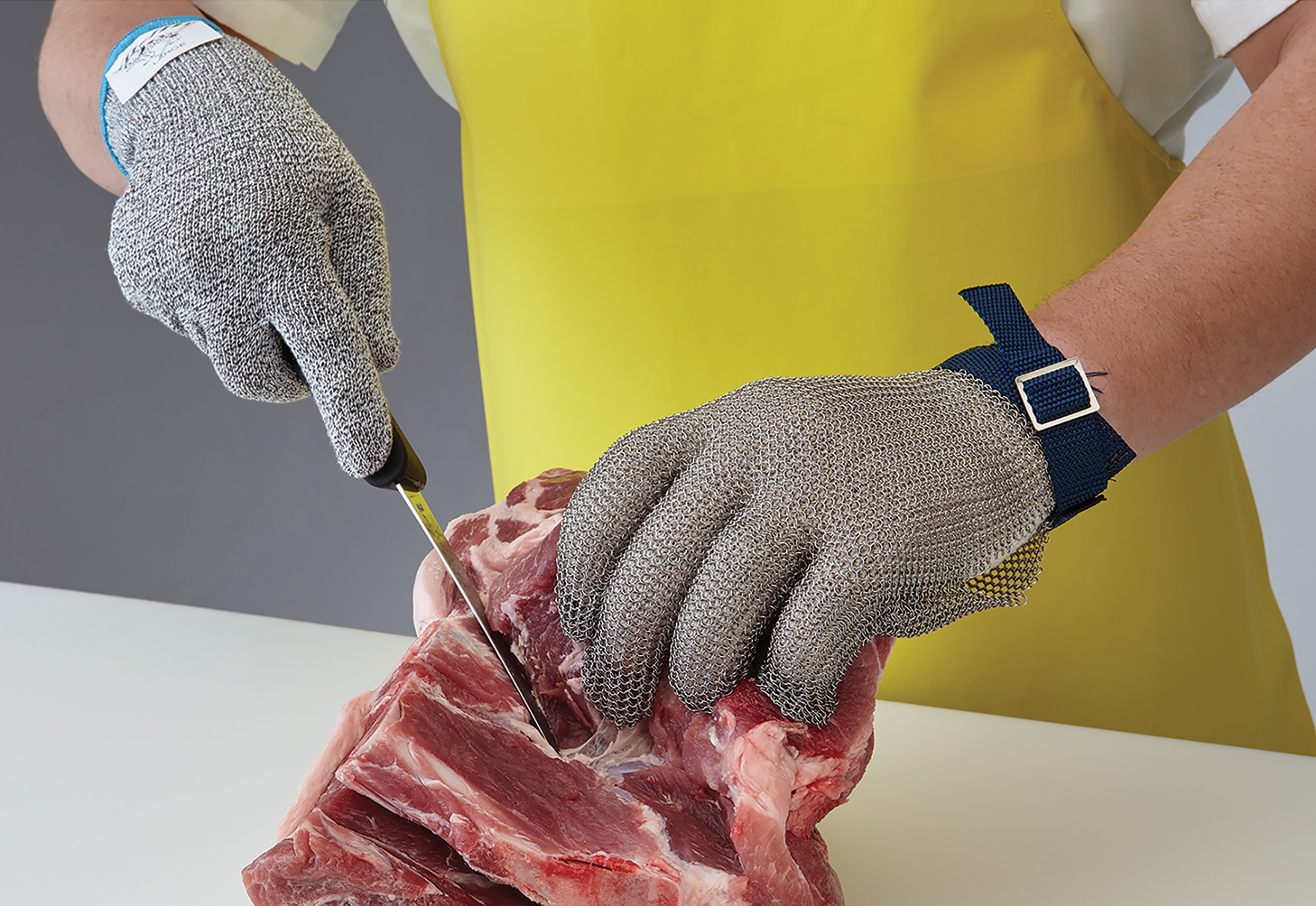
The downside? Metal mesh gloves are heavier and less flexible, resulting in less dexterity than cut-resistant gloves. For this reason, workers typically wear a metal mesh glove on the off-hand only. They pair it with a cut-resistant butcher glove on the knife hand for grip and dexterity. As a result, this combination puts maximum protection where the risk is highest without slowing the cutting hand’s performance.
3. Cotton Knit Butcher Gloves: Liner, Warmth, and General Handling
Cotton knit gloves are not a primary cut protection tool, as it serves a different role compared to cut-resistant or metal mesh. Instead, they work as liners for warmth in cold processing environments. They also suit general handling tasks that do not involve knife contact.
WorkHorse® knit gloves come in light, medium, and heavy weights to match different tasks across various production zones. In particular, the poly cotton blend provides grip without sacrificing breathability. The knit wrist edge holds up through repeated washing. In cold storage, a WorkHorse knit liner worn under a mesh or cut-resistant glove adds warmth without reducing protection.
Choose the Right Butcher Gloves for the Right Task
The most effective hand protection program utilizes all three types in the right roles. A cut-resistant butcher glove on the knife hand. A metal mesh glove on the off-hand for high-risk boning and breaking. A knit glove as a liner in cold zones or for general handling between cuts.
In contrast, choosing one glove type across all tasks will prove to be the wrong approach. A worker wearing a cut-resistant glove on both hands during bone-in breaking is at risk for preventable injuries. Meanwhile, a worker wearing metal mesh on the knife hand can lose the grip control the task requires. The task determines the glove.
Bunzl Processor Division carries the full WorkHorse® range of butcher gloves. Our selection of cut-resistant, metal mesh, and cotton knit styles covers multiple ANSI/ISEA 105-2024 cut levels, cuff lengths, colors and sizes for every role on your floor. Need assistance determining the best glove for your operation? Call 800-456-5624 or chat with us online. You can also reach our safety experts directly by submitting our 'Ask An Expert' online form.