Every threaded fastener, flange, and assembly point in a food processing plant faces the same enemies: heat, moisture, vibration, and corrosion. Anti-seize compounds protect those connections by preventing galling and seizure under load. Most maintenance teams keep them in the maintenance room and apply them across equipment without much distinction between products.
However, not all anti-seize lubricant products qualify for use near food-contact equipment. The wrong compound in the wrong area can introduce a chemical hazard under the HACCP program. For this reason, verifying the food-grade designation before a product hits the maintenance shelf matters.
Lubricant classification in food processing follows the NSF registration system. The two most relevant designations for plant maintenance are H1 and H2. Understanding the difference determines where each compound can safely go.
What H1 and H2 Mean for Anti-Seize Lubricant Selection
The NSF H1 designation covers lubricants approved for incidental food contact. Notably, the FDA defines incidental contact as exposure below 10 parts per million in the finished food. This definition comes from 21 CFR 178.3570. An H1-registered anti-seize lubricant meets this standard. Notably, it contains only ingredients approved for environments where minor food exposure is possible.
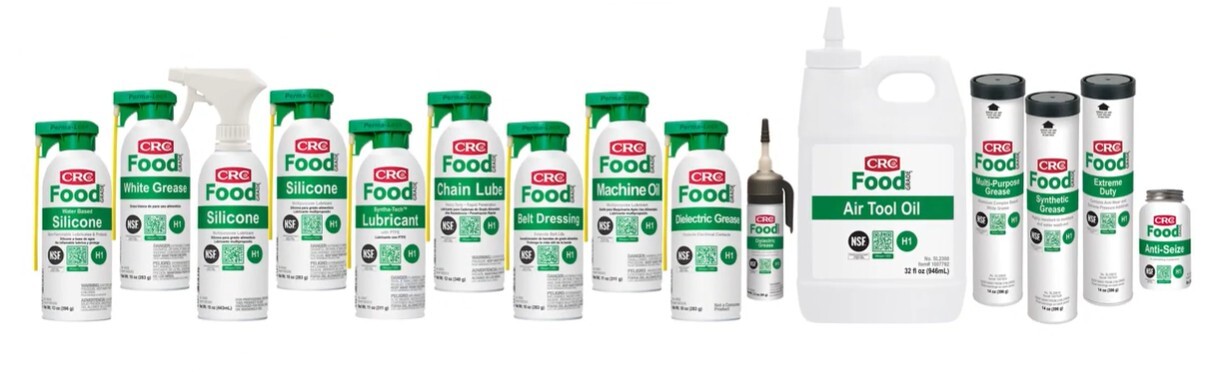
CRC Food Grade Greases and Lubricants are NSF H1 registered for incidental food contact.
The NSF H2 designation covers lubricants for food processing facilities but away from food-contact surfaces. Unlike H1, H2 compounds do not carry the same ingredient restrictions. Consequently, an H2 anti-seize lubricant on food-contact equipment creates a compliance gap. That is why the designation on the label is the distinction that matters.
Most general-purpose anti-seize compounds carry neither designation. They serve industrial and automotive uses where food exposure is not a factor. Furthermore, a compound without an NSF designation does not belong in a food processing plant. This applies regardless of the label's stated application.
Where Anti-Seize Lubricants Are Used in Food Processing Plants
Ultimately, anti-seize lubricants prevent galling, corrosion, and seizure on threaded connections. In a food processing plant, they appear in several areas. Some of those areas require H1-rated compounds. Others permit H2. The zone determines the designation. Threaded fasteners on conveyor frames, cutting equipment, and processing tables require an H1-rated anti-seize lubricant. This covers any assembly point where migration to the food stream is possible.
Mechanical rooms, utility connections, exhaust flanges, and structural assemblies away from the production floor are where H2 lubricants belong. However, H2 products must never move into food-contact zones during maintenance. A technician applying the same compound to a mechanical fitting and a food-contact fastener in the same shift creates a cross-contamination risk with no easy audit trail.
Washdown equipment and plumbing in processing areas can also present additional challenges. The water used by these tools can sometimes reach food-contact surfaces. For this reason, H1 lubricants are the safer choice for these installations.
How to Verify an Anti-Seize Lubricant Is Food-Grade
The NSF food-grade lubricant registry is the most reliable reference for verifying registration status. It lists every registered product by manufacturer, name, and designation. If a product doesn’t appear in the NSF White Book, it likely has yet to complete its registration.
The product label is the next checkpoint. A registered compound carries the NSF designation on the label and container while the Safety Data Sheet includes the NSF registration number. When neither label nor SDS lists an NSF number, the product has no confirmed registration.
Maintenance programs at large plants typically document approved lubricants assigned per area as part of the HACCP plan. Since this documentation covers all lubricants in the facility, anti-seize products belong on the list. Including the NSF designation and application zone for each product keeps the program defensible during audits. Moreover, this documentation gives inspectors the information they need without requiring on-the-spot verification.
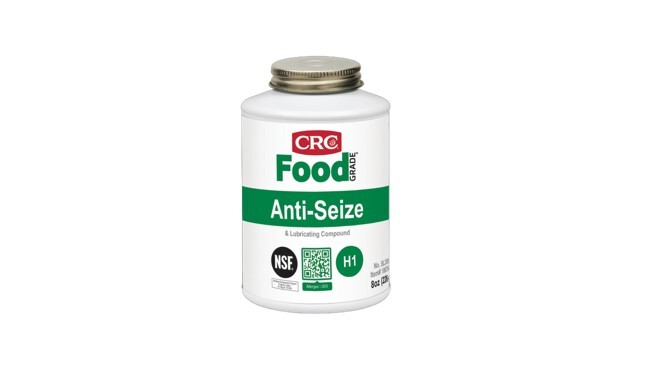
CRC’s Food Grade Anti-Seize product label clearly highlights it is NSF certified and is H1-rated.
Sourcing Food-Grade Anti-Seize Lubricants Through Bunzl Processor Division
Bunzl Processor Division carries anti-seize lubricants, including CRC Industries’ line for plant maintenance. Through our CRC partnership, customers can conveniently source H1, H2, and industrial lubricant categories from a single supplier. Backed by CRC’s comprehensive Food Safety Program, which helps ensure compliance with food processing standards and proper product selection, our facility maintenance team can also assist in identifying the right designation for each application in your plant.
Need assistance determining the right product for your needs? Our facility maintenance experts will be happy to help. Call 800-456-5624 or chat with us online. You can also reach our experts by submitting our 'Ask An Expert' online form.