


Hand protection in occupational settings follows a classification system. The American National Standards Institute (ANSI) and the International Safety Equipment Association (ISEA) jointly published a...
A scale that reads wrong in a federally inspected meat facility is not a minor issue. It is a compliance event that pulls the equipment from service until a qualified official clears it. For lines whe
Read Full Story
Hand protection in occupational settings follows a classification system. The American National Standards Institute (ANSI) and the International Safety Equipment Association (ISEA) jointly published a...

Most lacerations that occur in production facilities do not come from the primary task or even the primary cutting tool. They come from secondary or non-routine tasks: opening packaging, cutting strap...

Lidding film is one of the more convenient and consequential packaging decisions in production, whether it’s for ready-to-eat products, fresh produce, or various types of meat. However, the wron...

In a food processing facility, the choice of equipment used to move bulk material between production floors can affect line speed, product temperature control, and worker safety. Anything from being u...

Every threaded fastener, flange, and assembly point in a food processing plant faces the same enemies: heat, moisture, vibration, and corrosion. Anti-seize compounds protect those connections by preve...

It’s a common misconception that butcher gloves are a single product with zero variations. The term actually covers three distinct glove types that are each built for different tasks and risk pr...

Sweeping equipment carries real contamination risk when the wrong product ends up on a processing floor. Selecting the right heavy-duty brooms and dustpans affects food safety, sanitation efficiency,...

Sanitation workers handle shovels across full shifts under time pressure. They load and move bulk ingredients, often while standing on wet surfaces and reaching across conveyors. Handle shape, shaft l...

The work noise in food processing and meat processing plants can be very loud. Conveyor systems, grinding equipment, saws, and washdown operations routinely hit noise levels between 85 and 105 decibel...

While useful, wood pallets often present a persistent problem on food processing floors. They splinter, absorb moisture, harbor bacteria, and introduce foreign object risk where contamination controls...

Safety has always been a priority in food processing environments—but when flammable liquids are involved, the stakes are even higher. From sanitation chemicals and solvents to aerosols and main...
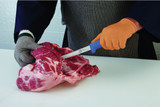
A butcher knife scabbard does more than protect a blade between cuts. In a meat processing plant, it also protects the operator and prevents cross-contamination. It falls directly under HACCP sanitati...