
The work noise in food processing and meat processing plants can be very loud. Conveyor systems, grinding equipment, saws, and washdown operations routinely hit noise levels between 85 and 105 decibels. When continually exposed to these levels, hearing damage can become real and permanent. Standard earplugs address the risk of losing one’s hearing. However, metal detectable earplugs address hearing loss, as well as another important risk: food safety.
The Two Problems Metal Detectable Earplugs Solve
Standard earplugs protect hearing and do nothing else. In a food processing plant, that's only half the job. An earplug that falls into a product stream without detection becomes a foreign object contaminant. That creates a recall risk, a food safety incident, and a HACCP problem.
Metal detectable earplugs solve both. They protect hearing. They also contain metal parts, typically steel ball bearings, that metal detection systems can find if the plug ends up where it shouldn't. Some models also use bright-colored foam and cords for visual detection as a second layer of control.
OSHA's Hearing Protection Requirements in Food Processing
OSHA requires employers to run a hearing conservation program when noise exposure equals or exceeds 85 decibels as an eight-hour average. Unfortunately for food processing workers, their work environment often exceeds this level. As a result, hearing protection is a legal requirement in most processing plants. In fact, it's not optional.
Under OSHA's standard, employers must provide hearing protectors at no cost to employees. They must also replace them as needed. For food processing facilities, choosing metal detectable earplugs helps meet hearing protection requirements. It also addresses the foreign object controls in a HACCP program. That's a meaningful advantage for any facility managing both.
What to Look for in Metal Detectable Earplugs
Not all metal detectable earplugs suit every application. Several factors matter when choosing the right option.
NRR Rating: The Noise Reduction Rating shows how much sound a protector blocks. Higher NRR scores mean more protection. WorkHorse® disposable metal detectable earplugs carry NRR 33. That's among the highest available.
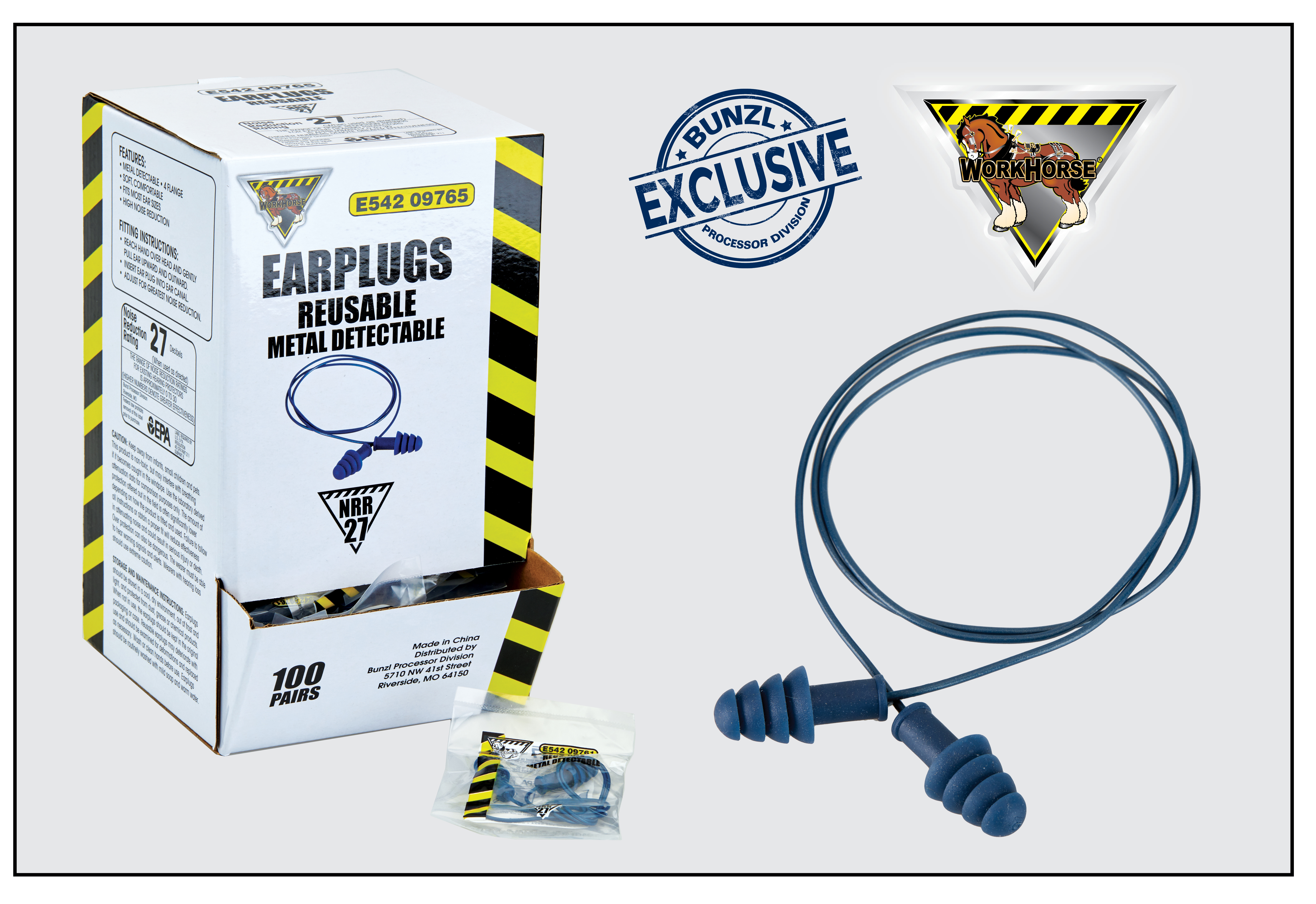
Earplug Design: For moderate noise, the WorkHorse reusable metal detectable earplugs offer an NRR 27 rating. The four-flange design conforms to the oval shape of the ear, providing a comfortable fit, and the stem allows for easy insertion.
Disposable vs. Reusable: Disposable earplugs are single-use and remove hygiene concerns. Reusable models offer long-term value by reducing restocking costs and generating less waste over time, making them a practical choice for facilities where operators manage their own PPE.
Cord vs. uncorded: Uncorded earplugs present a significant foreign material risk and are not recommended for food processing environments. Corded earplugs offer better control between uses and are less likely to be lost on the processing floor. Many metal-detectable options also include blue, detectable cords, enhancing both visibility and traceability.
Get Metal Detectable Earplugs Built for Food Processing
We, at Bunzl Processor Division, pride ourselves on being the leading single-source distributor for food and meat processing facilities. We carry a full range of metal detectable earplugs from trusted brands, including our own WorkHorse line.
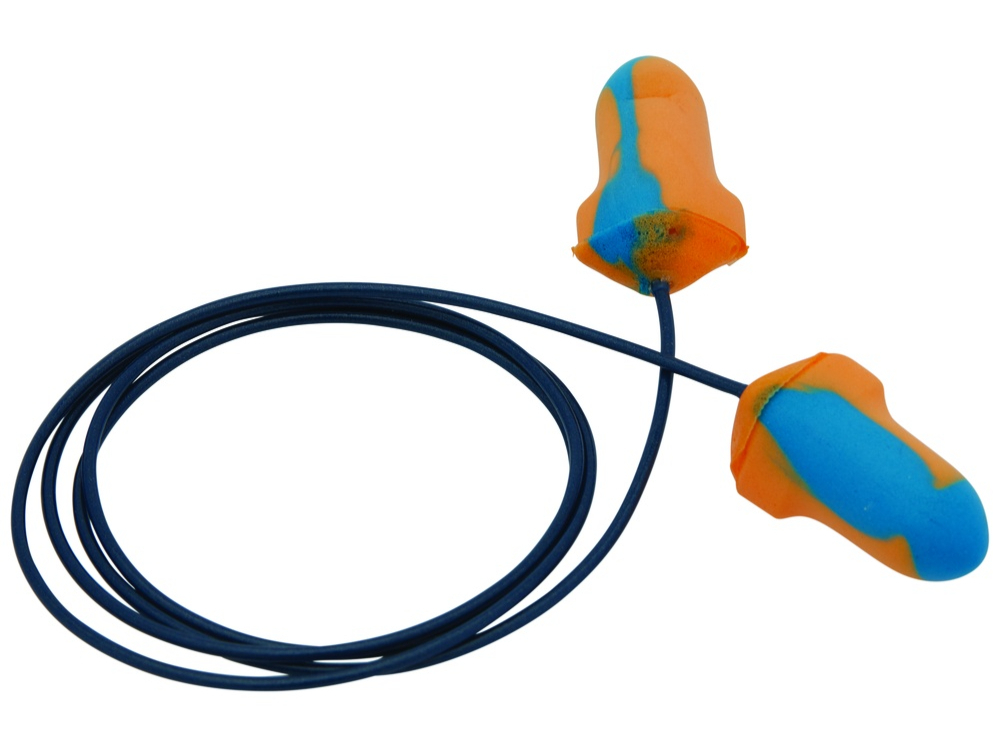
WorkHorse Disposable Metal Detectable Earplugs, T-Shaped, NRR 31
We are proud to offer WorkHorse bicolor, metal-detectable disposable earplugs featuring an embedded ball bearing. Unlike other similarly designed plugs, the ball bearing is fully enclosed and cannot become dislodged and fall into food. Both the WorkHorse earplugs and the cord are fully metal detectable.
Our metal detectable earplugs and a full range of ear protection for processing environments. If you want to know more about WorkHorse earplugs and other safety equipment, call 800-456-5624 or chat with us online. You can also reach our safety experts directly by submitting our online Ask An Expert web form. We’ll be happy to directly discuss the right hearing protection setup for your facility.