A butcher knife scabbard does more than protect a blade between cuts. In a meat processing plant, it also protects the operator and prevents cross-contamination. It falls directly under HACCP sanitation requirements. A scabbard that harbors bacteria or breaks down under cleaning chemicals is not a storage tool. It's a food safety risk.
Bunzl Processor Division is the leading single-source distributor for food and meat processing facilities. Our product line of knife sheaths, scabbards, and other storage solutions is designed for professional cutting environments.
Why Butcher Knife Scabbard Sanitation Matters
Knife scabbards come into direct contact with blades that touch meat. That makes them a cross-contamination point in any HACCP program. Bacteria can build up in crevices, seams, and worn surfaces. If a scabbard isn't cleaned on a regular schedule, it can recontaminate a clean blade each time the knife goes back in.
USDA FSIS sanitation standards for meat and poultry plants require that tools in contact with product surfaces stay clean and free from contamination. Knife scabbards fall under this rule. As a result, a facility's sanitation SOPs should include scabbards alongside knives, aprons, and other direct-contact items.
Choosing a Scabbard That Can Be Sanitized
Material and construction determine how well a knife scabbard holds up to the sanitation demands of a professional cutting environment. Polymer and hard plastic scabbards have smooth, non-porous surfaces that resist bacterial buildup and hold up under the cleaning chemicals used in food processing plants. Leather sheaths absorb moisture and are not suitable for food-processing applications.
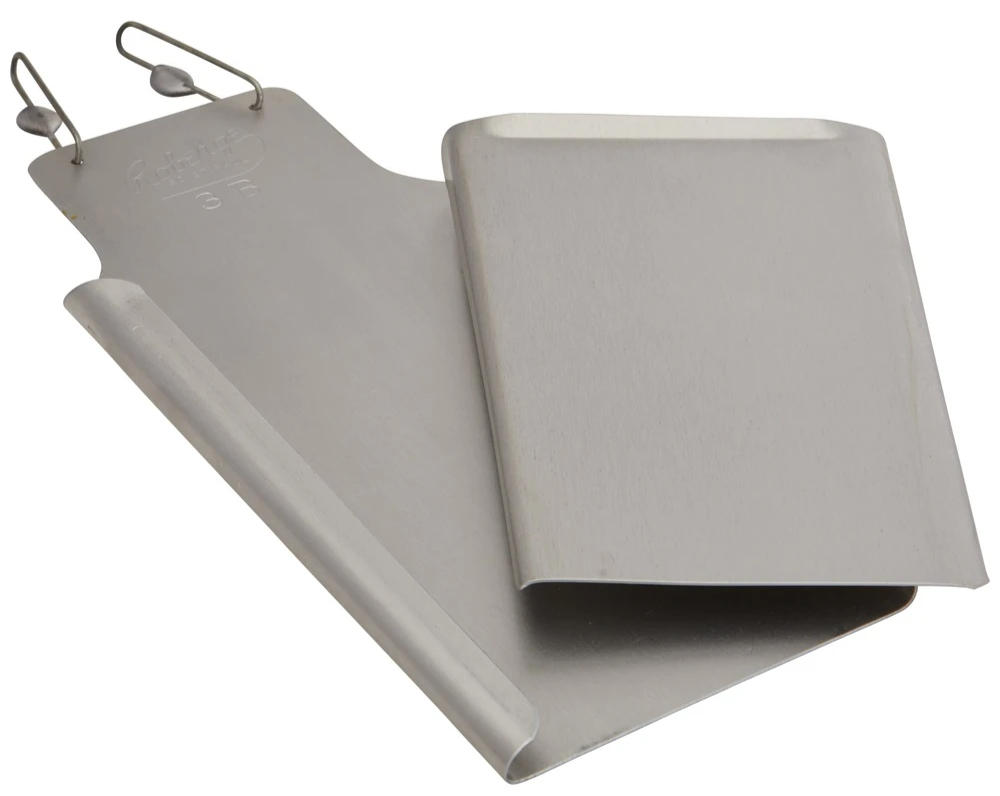
Aluminum scabbards have been a staple of the industry for decades. One key advantage is the removable front panel, which allows for more thorough interior cleaning. The tradeoff is that aluminum contact with the knife edge over repeated use will dull the blade over time, which adds cost and maintenance to your knife program.
Plastic scabbards are now the more common choice in professional processing environments, and for good reason. Because plastic is softer than the metal of the blade, inserting and removing the knife throughout the day does not dull the edge the way aluminum does.
Look for plastic scabbards with a removable front panel, which solves the cleaning problem that older plastic designs had. Retention tabs hold the blade securely, preventing knives from falling out when an operator bends over or moves through the facility. Air circulation channels in the body of the scabbard also allow proper drying after sanitation, which is as important as the cleaning step itself.
Regardless of material, choose a scabbard with few seams and no interior spaces where moisture or debris can collect. The simpler the design, the easier it is to clean consistently and verify during inspection.
How to Clean and Sanitize a Butcher Knife Scabbard
A consistent cleaning routine keeps a butcher knife scabbard from becoming a source of contamination. The steps are simple when built into the existing sanitation program.
First, remove the knife before cleaning. Rinse the scabbard with warm water to clear loose debris. Then apply an approved food-contact sanitizer to all surfaces, inside and out, including any locking parts. Allow the sanitizer to dwell for the contact time on the label. Rinse thoroughly if required and let the scabbard air dry fully before returning it to use.
Next, inspect the scabbard during each cleaning cycle. Look for cracks, chips, worn seams, or color change. These are signs of breakdown that make proper sanitation impossible. Consequently, a damaged scabbard should be replaced right away, not put back in service.
Replacement and Program Integration
Knife scabbards wear out over time. Even well-kept polymer scabbards eventually crack or warp from repeated sanitizing cycles. Waiting for a visible failure is not a sound practice. Instead, build scabbard inspection and replacement into the knife management program. Most facilities already track knife condition as part of HACCP records. Similarly, adding scabbard condition to the same log is a simple step that gives you a record that holds up during audits.
We at Bunzl Processor Division carry scabbards and other knife sheaths for professional processing environments, as well as a variety of knives and cutting equipment. Need help finding the right knife scabbard? Call 800-456-5624 or chat with us online. You can also reach our safety experts directly by submitting our Ask An Expert online web form.